Is Two Hours Enough For teamLab Planets?
How long teamLab Planets TOKYO really takes, where the queue forms, and how the advance-only timed slot changes the answer for a two-hour visit.
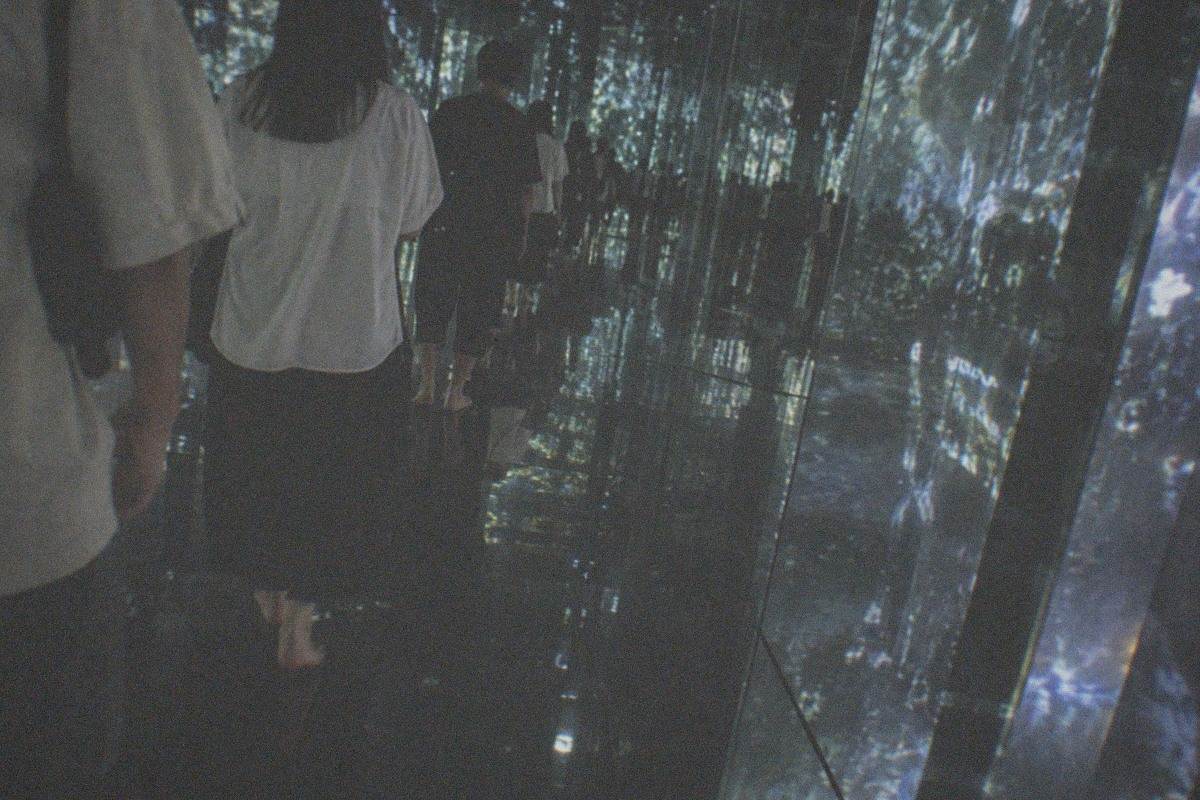
Two hours is the answer that gets repeated everywhere, and it is not wrong, but it is incomplete. teamLab Planets TOKYO does not sell tickets at the door at all, every admission is a date- and time-specified advance ticket, and the timed slot you chose weeks ago is what actually sets the shape of your visit, not the clock on the wall. The venue sits in Toyosu, one minute on foot from Shin-Toyosu Station on the Yurikamome Line, and it is announced to operate through the end of 2027, so the two-hour question will stay live for a while yet.
Is Two Hours Enough For teamLab Planets?
Yes, two hours covers the full circuit comfortably for most visitors, and the timed-entry design is built around exactly that pace. The rooms flow in a set order, you move through them with the crowd from your slot, and there is no way to linger indefinitely even if you wanted to. Plan for two hours inside, plus queue and check-in time at the front, and you will not feel rushed.
The honest framing is that teamLab Planets is a one-way route rather than a museum you wander. You enter, you move through the sequence, and you exit through the shop. Visitors who move at an average pace, stopping where a room grabs them, finish in about ninety minutes to two hours. Visitors who want to repeat the water rooms, wait for a quieter moment in a popular space, or photograph everything slowly can stretch it, but the flow of people from your entry slot sets a natural ceiling on how long anyone realistically stays.
What two hours does not cover is the arrival overhead. Because every ticket is timed, the queue outside is really a check-in line for your slot rather than a general admission line, and it moves at the pace of the staff scanning and directing. Arriving fifteen minutes before your slot is the sensible pattern; arriving at the exact minute means joining the back of a line that is already moving. Add the journey too: from central Tokyo, Toyosu is a short train ride plus the Yurikamome, so the door-to-door half day is the realistic frame for the visit even when the inside portion is two hours.
The ticket itself is the other half of the answer. Planets sells from $24.29 through the live listing, it holds a 4.7 rating across 21,329 reviews, and there is no door price to compare against because there are no door sales, full stop. If you are weighing the two teamLab venues against each other, the teamLab Planets versus Borderless comparison breaks down the differences in format, and the three picks below cover Planets alongside its Azabudai Hills sibling and a walk-in alternative in Ariake.
How Long Does Each Room At teamLab Planets Take?
Expect five to fifteen minutes per room, with the water rooms taking longest because of the preparation and drying involved. The circuit has a fixed order, so you cannot skip ahead or reorder it, and the rooms at the end, including the garden of lights, are where slow visitors spend their spare minutes. A steady walker finishes the full sequence in about ninety minutes.
The route is designed to be walked barefoot, and that single fact explains most of the timing. At the start you remove your shoes, store them, roll trousers above the knee or pull on the shorts provided, and from that point every room is entered on foot, sometimes through shallow water. The water rooms are the reason first-time visitors underestimate the visit: getting ready takes minutes, the rooms themselves reward standing still, and drying off properly at the end takes more minutes again. Rushing them defeats the purpose, and the crowd from your slot will not let you rush anyway.
The middle of the route is where the pace varies most. Some rooms are immersive but quick, a few minutes of moving through projected space, while others invite you to sit or lie down and let the environment move around you. Visitors on a two-hour budget should treat the seated rooms as the flexible part: if the clock is tight, walk through; if it is not, these are the rooms that make the ticket feel worth it. The sequence ends with the light-filled garden space, which most people linger in, and then the exit path runs through the retail area, which adds time for anyone shopping.
Because the timings below are planning ranges rather than operator figures, treat them as a budgeting tool, not a schedule:
| Part of the visit | Typical time | What controls it |
|---|---|---|
| Check-in, shoes off, preparation | 10-15 min | Queue for your slot and the pace of the changing area |
| Water rooms early in the route | 20-30 min | Crowd density and how long you stand in the water |
| Mid-route projection rooms | 30-45 min | Whether you sit and stay or walk through |
| Garden of lights and final rooms | 15-25 min | Personal preference, most visitors linger |
| Drying, shoes on, shop | 10-15 min | Drying stations and checkout queues |
If your slot is late in the day and you are working toward a dinner reservation, budget the full two hours plus the front-of-house overhead and you will land on time. If you have the whole afternoon, the same two hours leaves room to repeat favourites, which the one-way route does allow in practice because staff move visitors gently rather than strictly.
Where Does The Queue Form At teamLab Planets?
The queue forms outside the entrance at Toyosu and is organized by entry slot, so it is a check-in line rather than a first-come scramble. Because tickets are advance-only and timed, the line's length depends on how many people share your slot, not on how early you physically arrived. Fifteen minutes early is the practical target.
There is no same-day ticket desk to queue at, which changes the psychology of the line completely. Everyone standing there already holds a ticket for a specific window, so the staff are sorting and admitting rather than selling, and the line moves in bursts as each slot is called forward. Visitors arriving between slots sometimes wait longer than visitors who time their arrival to the slot boundary, because the staff clear the current group before starting the next one.
The practical advice is straightforward. Check your ticket's entry window, arrive a little before it, and use any waiting time for the practicalities: phones away or charged, bags ready for storage, trousers that can roll. The venue is one minute from Shin-Toyosu Station, so there is no long approach walk to pad the schedule with, and the surrounding Toyosu area has little to distract you if you arrive far too early. If you are coming from the teamLab Borderless side of the comparison, note that the two venues queue differently: Borderless at Azabudai Hills also runs timed slots but sells through its own official ticket website with the live listing as the only other channel teamLab names as official, while Planets sells through its official ticket store, convenience-store ticket terminals and the live listing, all in advance.
How Does The Timed Slot Change Your Visit?
The timed slot is the whole system: every ticket is date- and time-specified, sold only in advance, with no door sales of any kind, so your two hours start when your slot is called, not when you arrive. Slots spread visitors evenly through the day, which keeps the rooms from crowding but also means you cannot extend a visit by arriving early.
This is the fact that most "how long does it take" answers skip. A museum with walk-in entry lets you decide on the day how long you stay; Planets decides for you, because the room you are in is filling with the next slot's visitors behind you and the staff keep the flow moving. Two hours is enough precisely because the system is engineered so that two hours is what everyone effectively gets. Visitors who love a room can stay in it a little longer, but they cannot restart the circuit or hold a spot indefinitely.
Booking is the other half of the timed system. There is no price at the door to compare, because there is no door: the ticket you buy in advance is the only ticket that exists. Pricing is date-based and moves with demand, so the figure you see depends on the day you pick and is shown when you choose one. The official channel is the teamLab Planets ticket store, with convenience-store terminals and the live listing as the other routes, and the venue's own page lists the current slots and dates. If your preferred day shows nothing, the next release of dates is the answer rather than a door queue.
The slot also interacts with the two-hour question in one more way: late slots compress. A final slot of the day leaves less slack for lingering, because closing time is fixed and the staff need the full check-out sequence, drying and all, finished before the venue closes. If a relaxed two hours matters to you, book a morning or early-afternoon slot rather than the last one, and pair the visit with the what to wear at teamLab Planets question, because clothing choices are what make the water rooms fast or slow.
| Booking route | What it is | When to use it |
|---|---|---|
| Official ticket store | The venue's own advance sales channel | First choice for date choice and direct confirmation |
| Convenience-store terminals | Advance tickets through in-store machines | Useful inside Japan before your visit day |
| The live listing | The operator's reseller listing | Straightforward for overseas cards and English checkout |
teamLab Planets Or teamLab Borderless: Which Fits A Two-Hour Visit?
Planets fits a two-hour visit better, because it is a fixed one-way route with a natural end. Borderless at Azabudai Hills is built as a wandering space with rooms that connect and loop, so the same two hours buys you a sampler rather than the full experience there. If two hours is your hard budget, Planets is the surer bet.
The distinction matters more than the shared brand suggests. Planets is a sequence: you start, you finish, you know you have seen it. Borderless is a landscape: you drift, you find rooms, you double back, and visitors routinely report spending longer there than planned because there is no circuit telling them they are done. Neither is better, but they answer the two-hour question differently, and a visitor who needs certainty, a train to catch, a dinner booked, should lean Planets.
The practical comparison looks like this:
| Venue | Format | Ticket model | Two-hour verdict |
|---|---|---|---|
| teamLab Planets, Toyosu | One-way route, water rooms, barefoot | Advance only, timed, no door sales | Full experience fits |
| teamLab Borderless, Azabudai Hills | Wandering connected rooms | Timed slot, book ahead | Sampler, easy to overrun |
| SMALL WORLDS TOKYO, Ariake | Miniature dioramas, walk in | Door sales and advance both available | Comfortable, self-paced |
Planets also carries the operational certainty of a venue with a published future: it is announced to operate through the end of 2027, so a visit planned this year is a visit the venue is actually selling. Borderless, for its part, closes irregular Tuesdays, so its calendar needs a check before you lock a date, while Planets runs a published calendar with no fixed weekly closing day to rely on either way. The safe habit for both is the same: check the venue's own calendar for your date, then book.
For visitors who want the contrast without the commitment, SMALL WORLDS TOKYO in Ariake is the walk-in option: it sells from $19.15, holds a 4.6 rating across 1,254 reviews, and lets you set your own pace through the miniature cityscapes, with a 3,200 JPY door price for adults if you buy on the day. It is not a teamLab experience, but it is the format that never fights your schedule.
When Is teamLab Planets Quietest, And Does It Matter For Timing?
Morning slots on weekdays are the quietest, and the timed system flattens the differences more than at a walk-in attraction, because crowd size per slot is capped by design. What quietness buys you at Planets is not a shorter visit but a better one: fewer people in the water rooms and more space in the light garden.
The slot system is doing quiet-control work for you already. Every window admits a bounded group, so a busy Saturday feels crowded inside individual rooms but never becomes a free-for-all, and a quiet Tuesday morning feels almost private without the visit taking any less time. The two-hour answer barely moves between the two; what moves is how much of those two hours you spend waiting for a clear view or a photo moment.
The timing advice that follows from this is to pick your slot by experience rather than by length. If you want the water rooms to yourself, book the earliest slot you can reasonably make, because the first groups of the day meet the freshest rooms and the thinnest crowds. If you want the visit as part of an evening plan, a late slot works but remember the compression noted above: closing time is fixed. The deeper dive on slot-picking lives in the best time to visit teamLab Planets guide, which works through the trade-offs in full.
One planning note that belongs here rather than anywhere else: because every ticket is advance-only, "quiet" is partly decided at purchase. Popular slots sell out first, so the quiet early-morning windows are often the ones that need booking furthest ahead, while mid-afternoon weekday slots can sometimes be bought closer to the day. Two hours inside the venue is fixed; the effort to secure the slot you want is the variable.
What Should You Wear To Keep The Visit Moving?
Wear trousers that roll above the knee, or shorts, and clothes that can get damp, because the water rooms are walked barefoot through shallow water and the drying stations at the end add real minutes to the visit. The venue lends shorts for visitors whose clothing does not work, but using the loan shorts adds queue time at both ends.
Clothing is the most underrated input in the two-hour calculation. A visitor in rollable trousers glides through preparation and drying; a visitor in tight jeans spends the front of the visit at the changing area and the back of it at the towels. The difference between the two is easily ten or fifteen minutes of the total, which inside a two-hour visit is a meaningful share. Dark colours also photograph better in the projection rooms, which matters to visitors who plan to take pictures, and anything you would be nervous to get splashed should stay at the hotel.
Bags are handled by the venue's storage arrangements, but a small cross-body setup is faster than a full daypack at every checkpoint. Phones are the other friction point: the water rooms and the mirrored rooms invite photos, and a phone that is buried or uncharged costs you the moments the visit is for. Charge it, keep it reachable, and keep the case on, because floors are wet in places and drops happen.
The full clothing question, including what the venue provides and what it does not, has its own write-up, and the details there interact directly with this one: the better the outfit decision, the more of your two hours you spend inside the art rather than in the changing area. Visitors who get this right are the ones who report that ninety minutes felt generous, and they are also the ones who never queued for loan shorts.
Is Two Hours Really The Whole Answer For A teamLab Planets Trip?
For the venue itself, yes: two hours inside, plus fifteen minutes of check-in overhead, is the complete visit. For the day, no: Toyosu is not central, the Yurikamome ride is part of the experience, and most visitors pair Planets with something nearby rather than treating it as a drop-in. Budget the half day and the two hours stops feeling tight.
The geography is the last piece. Planets sits at 6-1-16 Toyosu in Koto, one minute from Shin-Toyosu Station, which sounds frictionless until you notice that Shin-Toyosu is on the Yurikamome loop, the elevated driverless line that crosses to Odaiba. The ride is scenic and slow by commuter standards, and the transfer to reach it depends on where you start. From the Asakusa side, from Shibuya, from Shinjuku, the approach differs, and a visitor who books a 10:00 slot from a 9:00 hotel departure in the wrong part of town is engineering their own stress.
Pairing solves it. The Toyosu and Odaiba corridor holds several of the venues this site covers: SMALL WORLDS in Ariake, the Unko Museum and its DiverCity neighbours, Madame Tussauds and Tokyo Joypolis at DECKS Tokyo Beach. A morning at Planets followed by an afternoon in Odaiba is a natural day, and it is the pattern that makes the two-hour figure feel generous rather than constraining, because the visit is one chapter of the day instead of the whole errand. The Tokyo Museums guide set covers the full spread if you want to build the rest of the day around the ticket you just bought.
The last word on the core question, then: two hours is enough, the timed slot makes it enough, and the only real mistakes are arriving without the advance ticket, because there is no door to buy one at, and dressing in a way that eats your margin at the water rooms. Book the slot, roll the trousers, arrive a little early, and the visit lands exactly on the number everyone quotes.
Common Questions About How Long teamLab Planets Takes
Is Two Hours Enough For teamLab Planets?
Yes. Two hours inside covers the full one-way circuit at a comfortable pace, and the timed-slot system is designed around roughly that duration. Add fifteen minutes for check-in and preparation at the front, and remember that the ticket must be bought in advance because there are no door sales at all.
Can you stay longer than two hours at teamLab Planets?
You can linger within reason, but the one-way route and the flow of visitors from the next entry slot set a natural ceiling. Most visitors finish in ninety minutes to two hours, and late-day slots have less slack because closing time is fixed.
Can you buy a teamLab Planets ticket on the day?
No. Every ticket is a date- and time-specified advance purchase. The official ticket store, convenience-store terminals and the live listing are the routes, and if a date shows nothing, the answer is the next release rather than a queue at the venue.
How early should you arrive for your teamLab Planets slot?
About fifteen minutes. The line outside is a check-in line organized by entry slot, not a first-come scramble, so arriving early mostly means waiting in an orderly group until your window is called forward.
Does the water affect how long the visit takes?
It is the biggest timing variable after the slot itself. You walk the water rooms barefoot, and preparation plus drying at the end easily add twenty to thirty minutes across the visit. Trousers that roll above the knee, or shorts, keep that overhead short.
Is teamLab Planets faster to visit than teamLab Borderless?
For a fixed two-hour budget, yes. Planets is a one-way route with a defined end, while Borderless is a wandering space of connected rooms that visitors routinely overrun. If you need certainty, Planets is the surer fit.
Does teamLab Planets have a closing day that changes planning?
There is no fixed weekly closing day to plan around. The venue runs a published calendar, so check your intended date on the venue's own page before booking travel, the same habit that applies to its Azabudai Hills sibling with its irregular Tuesday closures.