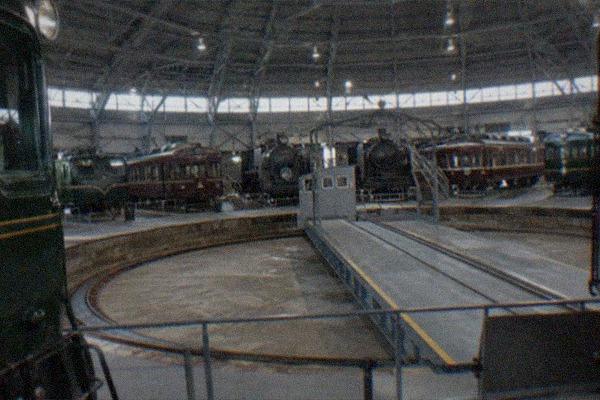
The Railway Museum
Omiya, Saitama
from $9.79per person, live price on the listing Check availability →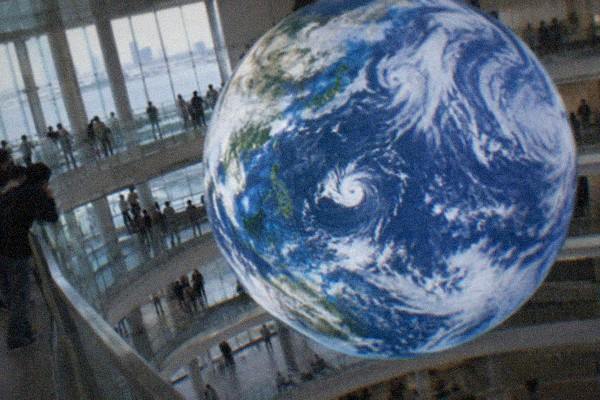
from $4.15 per person, live price on the listing
Check Price & Availability →Opens the official listing with live dates and prices. Book there; nothing is charged on this site.
A sphere roughly the size of a small building hangs inside Miraikan's open atrium, covered in LEDs and displaying the Earth as it is right now: cloud cover, ocean temperatures, the glow of cities at night. This is the Geo-Cosmos, the centerpiece of Japan's National Museum of Emerging Science and Innovation, on the Odaiba waterfront in Koto. Around it spread hands-on zones on robotics, space and the frontiers of research, plus the Dome Theater GAIA, a planetarium-style venue that needs its own add-on ticket. Two facts shape any visit plan more than anything else in this guide. Miraikan closes every Tuesday, and the entire museum, every floor and every facility, shuts for refurbishment from 1 October 2026 until it reopens on 23 April 2027. The last open day is 30 September 2026.
Miraikan, the National Museum of Emerging Science and Innovation, is Japan's national museum of future-facing science, sitting on the Odaiba waterfront in Koto. Its signature object is the Geo-Cosmos, a giant globe of live Earth data. The whole museum closes for refurbishment from 1 October 2026 and reopens on 23 April 2027.
The museum was built to make current research tangible rather than to house old objects. The permanent exhibitions are organized around questions: how robots and humans might coexist, what the frontier of space exploration looks like, how Earth's systems behave as one interconnected whole. The Geo-Cosmos anchors that last theme, updating continuously with satellite data so the sphere you see is never quite the same twice.
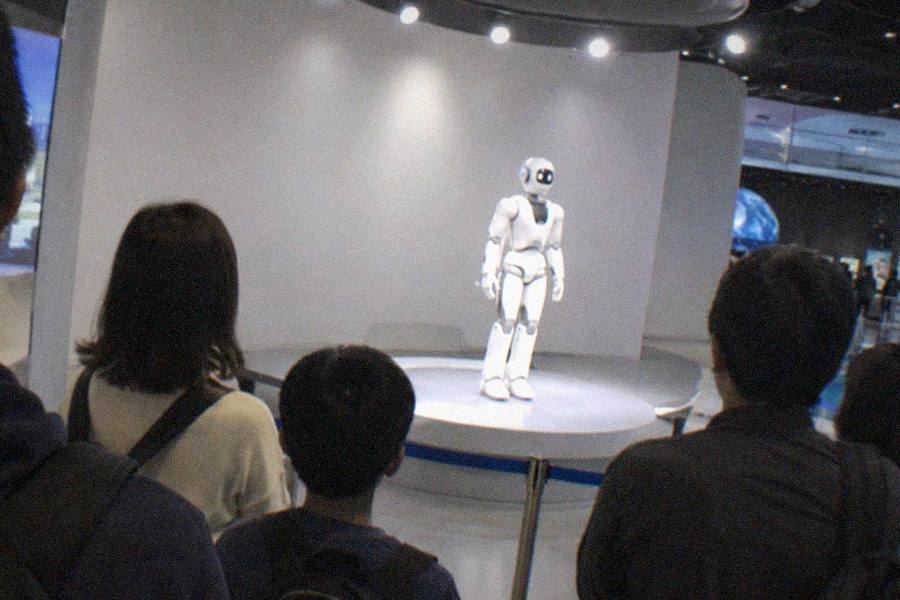
The robot area is the other big draw. Demonstrations run through the day, and the exhibits are built to be watched, questioned and argued with rather than glanced at. The Dome Theater GAIA screens films on a domed screen and is the one part of the museum that needs a separate ticket, sold as an add-on. It is worth deciding before you queue whether you want it, because the combined ticket is cheaper than buying the two separately.
Miraikan suits families with school-age children and any visitor who prefers interactive science over curated art. It suits less well anyone hoping for a quiet, contemplative hour: school groups fill the building on weekdays, and the hands-on zones are loud by design. If your taste runs to natural history rather than emerging technology, the National Museum of Nature and Science in Ueno covers dinosaurs, evolution and the physical sciences at the same door price.
Permanent-exhibition admission is 630 JPY for adults, about 4 US dollars, bought at the door or online. The Dome Theater adds 310 JPY for an adult, so a combined ticket is 940 JPY. Advance tickets sell only one week out through Miraikan's own ticketing site; on the day, the outside booth sells from 10:00 to 16:30.
The structure is simple. One ticket covers the permanent exhibitions, which is almost everything in the building. The Dome Theater GAIA is the only paid extra, and it is optional. Special exhibitions, when they run, are ticketed separately, and their prices change with each show, so the current figure is on the museum's own admission page at miraikan.jst.go.jp.
| Ticket | Price |
|---|---|
| Permanent exhibitions, adult | 630 JPY |
| Dome Theater GAIA add-on, adult | 310 JPY |
| Combined ticket, adult | 940 JPY |
| Special exhibitions | check the museum's own site |
| Where to buy | Miraikan's own online ticketing site, or the outside ticket booth on the day, 10:00-16:30 |
There is no timed entry and no date-locked inventory, so the price does not move with demand the way it does at some Tokyo venues. What you pay is what is printed above, whichever day you come. If you want to skip the booth queue on a busy morning, buying through Miraikan's own online ticketing site beforehand is the simplest route, and that is the only nudge this page will give you.
One caution belongs here rather than in a footnote: no ticket of any kind can cover a date from 1 October 2026 to 22 April 2027, because the museum will not exist as a visiting venue on those dates. Advance tickets only sell one week out, so no date inside the closure window is purchasable anywhere.
You can walk in. Miraikan needs no timed slot and no advance reservation, which makes it one of the easiest major Tokyo museums to enter. Advance tickets appear on Miraikan's own ticketing site one week ahead, and the outside ticket booth sells same-day entry from 10:00 until 16:30. A sold-out slot is not a concept here.
This matters more than it sounds. Tokyo's headline venues split sharply into two camps: the timed-slot museums, where a ticket is a reservation for a specific hour, and the walk-in museums, where a ticket is just a ticket. Miraikan is firmly in the second camp, alongside the Railway Museum in Omiya, which also sells on the day at its own machines and counter.
The contrast with the venues that cannot be walked into is worth understanding before you build an itinerary. teamLab Planets, the Ghibli Museum and the Fujiko F. Fujio Museum sell no door tickets at all. teamLab Borderless and the Warner Bros. Studio Tour run timed slots that sell out. Miraikan's one-week advance window exists mostly for convenience: buy online if you like, or arrive and pay at the booth.
What a walk-in museum does have is a queue on peak days. Weekend mornings and school-holiday weekdays can put a line at the outside booth, and the Dome Theater's same-day allocations for popular screenings can go early. Neither is a reason to panic-book. Arrive near the 10:00 opening, or come after lunch when the school groups have thinned, and the walk-in promise holds.
The one booking rule that genuinely matters here is the calendar one: plan around the closure, not around scarcity. Any visit before 30 September 2026 is a walk-in day. Any visit after that belongs to 23 April 2027 onward.
Miraikan closes every Tuesday and, far more importantly, the whole museum shuts for refurbishment from 1 October 2026 to 22 April 2027, reopening on 23 April 2027. The last open day is 30 September 2026. Nothing stays open: permanent exhibitions, Geo-Cosmos, Dome Theater GAIA, the robot area, shop, cafe and library all close.
The museum's own English announcement is unambiguous: Miraikan will be closed for refurbishment for approximately six months, from October 1, 2026 to April 22, 2027. The Japanese notice says the same thing in plainer terms, whole museum closed. This is not a partial closure where one gallery shuts and the rest carries on. Every floor, every facility and every exhibit goes dark, and no satellite venue has been announced to take visitors in the meantime.
That makes the weekly Tuesday closure almost trivial by comparison, but it still catches people. Miraikan is open on Mondays, which is unusual among Tokyo's major museums: the big Ueno nationals all close Monday, so a Monday Odaiba day works well here. Tuesday is the day to avoid, and the museum's hours on every other open day are 10:00 to 17:00, with the ticket booth stopping sales at 16:30.
If your trip falls inside the closure window, the honest alternatives nearby are the Odaiba entertainment venues rather than a substitute science museum. For hands-on science elsewhere in the lineup, the Railway Museum in Omiya is a half-day trip and stays open through the period, closing only on Tuesdays itself.
The Tokyo Museum Grutto Pass gives free entry on Miraikan's permanent exhibition, but the benefit is academic while the museum is closed: the pass cannot be used here from 1 October 2026 until the museum reopens on 23 April 2027. The pass also excludes both teamLabs, the Ghibli Museum, Warner Bros. Studio Tour and Sanrio Puroland.
The Grutto Pass, 2,500 JPY, covers 107 facilities across Tokyo for two months from first use, and every listing on it is either free entry or a discount, decided facility by facility. At Miraikan the pass is a free-entry listing on the permanent exhibition, which at 630 JPY is a modest but real saving. The full rules and the facility list are on the official pass site at rekibun.or.jp.
What the pass does not cover is the part most guides skip. It excludes teamLab Borderless and teamLab Planets, the Ghibli Museum in Mitaka, Warner Bros. Studio Tour Tokyo, Sanrio Puroland, the National Art Center, Nezu, Artizon, Meiji Jingu Museum, the Railway Museum, Hakone Open-Air, SMALL WORLDS, the Unko Museum, Madame Tussauds, Tokyo Trick Art, both Yokohama museums, Edo Wonderland, and special exhibitions at almost every facility on the pass. There is no other genuine multi-museum pass for Tokyo, and no pass shortcut of any kind to the four capacity-managed headline venues.
For Miraikan specifically, the arithmetic is straightforward. One free entry here recovers a quarter of the pass price, and the pass's two-month validity window plus its 31 March 2027 hard expiry mean it only makes sense here in combination with several other listings. And any use must fall before 30 September 2026 or after the reopening, because a pass cannot walk through a shut door.
Miraikan sits at 2-3-6 Aomi, Koto-ku, on the Odaiba waterfront. Tokyo International Cruise Terminal on the Yurikamome Line is a five-minute walk; Tokyo Teleport on the Rinkai Line is fifteen minutes. Allow half a day, and pair it with another Odaiba venue. Note the whole museum closes 1 October 2026.
The Yurikamome approach is the better one for first-time visitors. The driverless train curves across Rainbow Bridge with the bay on both sides, and the museum is a short, flat walk from the Tokyo International Cruise Terminal stop. The Rinkai Line from Tokyo Teleport is faster from some parts of the city but involves a longer walk on arrival.
| At a glance | Detail |
|---|---|
| Hours | 10:00-17:00 |
| Closed day | Tuesday |
| Area | Aomi, Odaiba, Koto |
| How far ahead to book | Walk in; advance tickets one week out via Miraikan's own ticketing site |
| How long to allow | Half a day |
Half a day is the right budget. Two to three hours covers the permanent exhibitions at a reasonable pace; add the Dome Theater screening and you comfortably fill the afternoon. The building is family-oriented, so weekday afternoons after the school groups leave are the calmest window.
Odaiba pairs well because the alternatives are all in walking or short-train range. SMALL WORLDS TOKYO is one stop up the Yurikamome at Ariake, the Unko Museum is at DiverCity Tokyo Plaza, and Madame Tussauds, the Trick Art Museum and Tokyo Joypolis share the DECKS Tokyo Beach complex. None of those is a science museum, but together they make a full Odaiba day that survives Miraikan's closure window intact. Check the museum's own admission page before you lock a date, and if your trip falls between 1 October 2026 and 22 April 2027, plan this day around the waterfront instead.
Permanent-exhibition admission is 630 JPY for adults. The Dome Theater GAIA is a 310 JPY add-on, so a combined ticket is 940 JPY. Special exhibitions, when running, are priced separately and the current figure is on the museum's own site.
No. Miraikan is a walk-in museum with no timed entry. Advance tickets appear on Miraikan's own online ticketing site one week ahead, and the outside ticket booth sells same-day entry from 10:00 to 16:30. A sold-out slot is not a concept here.
The whole museum closes from 1 October 2026 to 22 April 2027 and reopens on 23 April 2027. The last open day is 30 September 2026. Nothing stays open: permanent exhibitions, Geo-Cosmos, Dome Theater GAIA, the robot area, shop, cafe and library all shut.
Tuesday. Miraikan is open on Mondays, unlike the big Ueno national museums, so a Monday Odaiba day works well. Hours on open days are 10:00 to 17:00, with the ticket booth stopping sales at 16:30.
Yes, as free entry on the permanent exhibition, but the benefit is academic while the museum is closed from 1 October 2026 to 22 April 2027. The pass also excludes both teamLabs, the Ghibli Museum, Warner Bros. Studio Tour and Sanrio Puroland.
The museum is at 2-3-6 Aomi, Koto-ku, on the Odaiba waterfront. Tokyo International Cruise Terminal on the Yurikamome Line is a five-minute walk, and Tokyo Teleport on the Rinkai Line is fifteen minutes away.
Half a day. Two to three hours covers the permanent exhibitions at a reasonable pace, and adding a Dome Theater GAIA screening comfortably fills the afternoon. Weekday afternoons are calmer once the school groups leave.
Omiya, Saitama
from $9.79per person, live price on the listing Check availability →
Ueno Park, Taito
from $4.10per person, live price on the listing Check availability →