What Is The Point Of The Unko Museum, And Is It Worth Visiting?
An honest look at Tokyo's Unko Museum in Odaiba: what the date-tiered ticket buys, who the rainbow rooms are for, and whether a visit is worth your time.
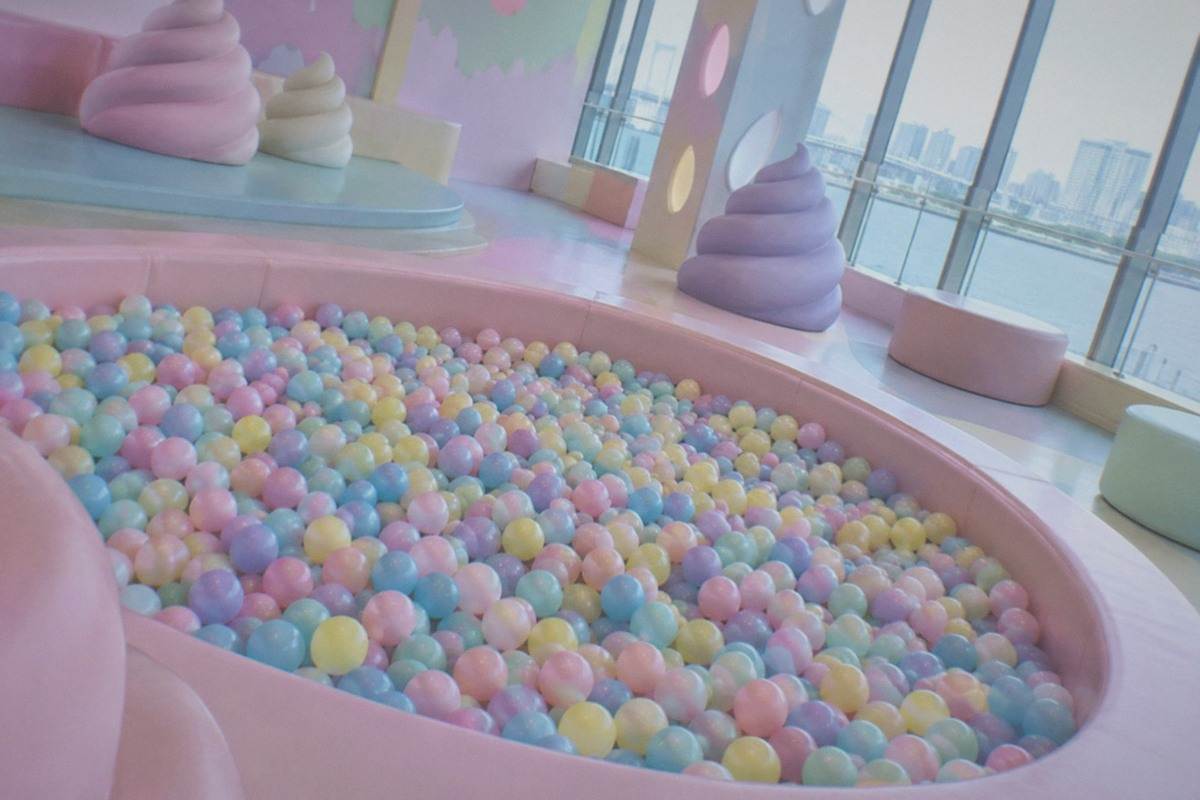
DiverCity Tokyo Plaza in Odaiba is best known for the giant unicorn Gundam standing outside its second floor, but one floor up, a very different attraction runs on a single, untranslatable pun. Unko means poop in Japanese, and it happens to sound close to un, the word for luck. The Unko Museum Tokyo takes that pun, paints it in every candy colour a set designer could find, and sells a walk-through experience built almost entirely for photographs. It is not a museum in the classical sense. There are no vitrines, no labels and no collection. There is a soft-serve-shaped rainbow, a glowing fortune-telling installation and a lot of very committed theming. This article explains what the place actually is, what the date-tiered ticket buys, and who walks out happy versus who walks out bemused.
What Is The Point Of The Unko Museum, And Is It Worth Visiting?
The point is play, not education: the Unko Museum is a themed photo experience in DiverCity Tokyo Plaza, Odaiba, built around the Japanese pun between unko (poop) and un (luck). It is worth visiting for families with young children, groups wanting funny photos and anyone who enjoys absurdist Japanese pop culture. Adults visiting alone for art or history will finish in under an hour and may find the price hard to justify.
The concept sounds like a joke told at a board meeting that nobody was brave enough to question, and in a way that is exactly its charm. The museum's designers committed fully to the bit. Everything is poop-shaped and everything is cheerful: the pastel poop soft-serve sculpture, the rainbow wall of icons, the carnival-style games where you launch projectiles at targets, and the fortune corner where a glowing dispensing machine delivers your unko fortune for the year. The humour is entirely innocent and entirely visual, which is why it photographs so well and why the venue's marketing leans on camera-ready set pieces rather than on any curatorial claim.
Is it worth visiting? That depends almost entirely on who is in your party and what kind of day you are having in Odaiba. A family with children aged roughly four to ten will get a full hour of delight, and the kids' photo album will carry the visit for weeks. A couple in Odaiba for the seaside views, the Gundam and the mall food can spend forty amused minutes here and call it a successful detour. A solo traveller ticking off Tokyo's serious museums, on the other hand, should read the ticket-price section below before deciding, because the cost is not trivial and the experience is short. If you are planning a broader Odaiba or quirky-Tokyo day, our rainy day museums in Tokyo guide places the Unko Museum in a full indoor itinerary that makes the trip out to Odaiba stack up better.
If you already know the answer is yes, the practical details are on the Unko Museum Tokyo tour page.
What Is Actually Inside The Unko Museum Tokyo?
Inside you find a sequence of colour-saturated, camera-built rooms rather than exhibits: a rainbow poop sculpture styled like soft-serve ice cream, a wall of glowing icons, carnival-style games, a themed cafe corner and a fortune-telling machine that dispenses your luck for the year. Everything is designed to be photographed, nothing is behind glass, and the whole loop takes most visitors between forty minutes and an hour.
The layout works as one continuous loop. You enter through a bright corridor that sets the tone, pass the signature rainbow installation, move through the interactive game zone where you can fling soft projectiles at targets, and end at the fortune area, where the unko-un pun pays off: your fortune is dispensed from a glowing machine and, if the museum is having a generous day, you leave with a small themed souvenir. The games are simple, physical and free once you are inside, which matters for families: there is no pay-per-activity upsell inside the way there is at some Odaiba attractions.
What there is not matters as much as what there is. There is no permanent collection, no explanatory text beyond a few joke signs, and no quiet contemplative corner. The venue is honest about this on its own pages, which present it as an experience rather than a collection, so nobody should arrive expecting the Tokyo National Museum with better lighting. The nearest comparison in spirit is a themed Instagram set that happens to have a museum in its name. The museum's own site, unkomuseum.com/tokyo, shows the current rooms and any rotating installations before you commit to the trip out to Odaiba.
One genuinely useful point for planners: the venue sits inside DiverCity Tokyo Plaza, the same mall as the giant Gundam statue and a large food floor. The nearest stations are Daiba on the Yurikamome Line, five minutes on foot, and Tokyo Teleport on the Rinkai Line, three minutes. That makes the Unko Museum a natural one-hour block inside a half-day Odaiba plan rather than a destination in itself, and combining it with the mall's other draws is how the travel time starts to feel worthwhile.
How Much Do Unko Museum Tokyo Tickets Cost?
Adult tickets are date-tiered at 2,000, 2,200, 2,400 or 2,800 yen depending on the day you pick, with junior high and high school students at 1,100 yen and up to two children aged two and under entering free with each adult. There is no single fixed adult price: the museum charges more on peak days, so the date you choose, not the ticket type, decides what you pay.
The tiering is the detail most first-time visitors miss. Two people can pay noticeably different amounts for the identical experience purely because one picked a weekend and one picked a weekday morning. The lowest tier, 2,000 yen, typically applies to quieter weekdays, while the top tier, 2,800 yen, lands on peak holiday and weekend dates. Junior high and high school students pay a flat 1,100 yen regardless of the date, and the under-two rule is per adult: each adult over 18 can bring up to two children aged two or under at no charge, which is unusually generous for Tokyo and worth knowing for families with a toddler in tow.
| Visitor type | Price | Notes |
|---|---|---|
| Adult | 2,000 / 2,200 / 2,400 / 2,800 JPY | Date-tiered, the day you pick decides the tier |
| Junior high and high school student | 1,100 JPY | Flat rate across all dates |
| Children 2 and under | Free | Up to two per adult over 18 |
The venue also sells through the live listing, where the product starts from $13.05, and the listing carries a 4.3 rating across 1,129 reviews. Read that rating with the right expectations: reviewers who came with children or in laughing groups score it highly, while a minority who expected a conventional museum score it low for exactly the reasons this article keeps repeating. The rating is an average across two very different kinds of visitor, and your own party's composition will predict which side of the average you land on far better than the number itself.
Do You Need To Book Unko Museum Tickets In Advance?
You do not need to book ahead in principle, because the museum sells same-day tickets at its reception, but same-day tickets are limited and advance purchase is recommended on weekends and holidays. The venue is a walk-in attraction on quiet days; on peak days, buying your dated ticket in advance is the difference between walking straight in and being told to come back later.
This is the standard booking pattern for Tokyo's smaller themed attractions and it is worth internalising before any Odaiba trip. The Unko Museum runs a walk-in, quiet-days policy, which places it in the same practical category as the National Museum of Western Art and the Tokyo Toy Museum, and a world away from the advance-only venues. teamLab Planets in Toyosu, for example, sells no door tickets at all, and the Ghibli Museum in Mitaka sells nothing on site either. Against that backdrop, the Unko Museum is forgiving: on a Tuesday afternoon you can decide on the Yurikamome train and buy at the desk. The wider set of guides lives on Tokyo Museums.
The catch is capacity. The rooms are small and the museum caps entry, so same-day tickets can run out on weekends, national holidays and rainy days when Odaiba's indoor attractions absorb everyone's plans. The venue itself recommends advance purchase, and the practical rule is simple: if your visit falls on a Saturday, a Sunday, a public holiday or a wet afternoon, buy the dated ticket ahead; if it is a weekday outside a school holiday, walk in. The museum runs a calendar rather than a fixed weekly closing day, so check the museum's own calendar for your date rather than trusting any day-of-week claim you may read elsewhere.
Is The Unko Museum Good For Kids And For Adults?
For children roughly aged three to ten it is close to a guaranteed hit: the games are physical, the colours are loud and the joke lands at exactly that age. For adults it splits cleanly: groups and couples taking photos enjoy it, while adults expecting substance finish quickly. Teenagers tend to enjoy it ironically; serious museum-goers should spend their money elsewhere.
The children's verdict is the easy one. Everything inside is touchable, throw-able or photographable, the games have no skill barrier, and the under-two free rule plus the flat 1,100 yen student rate make the family maths friendly. If your Tokyo trip already includes a heavier day at somewhere like the National Museum of Nature and Science in Ueno, the Unko Museum is the sugar course that keeps young children cooperative about the rest of the itinerary, and pairing a serious museum with a silly one is one of the more reliable tricks for travelling with kids in this city.
The adult verdict needs honesty. This is not the Samurai Ninja Museum in Asakusa, where the ticket buys a guided tour, armour you can actually wear and a shuriken-throwing session; it is also not a studio tour with genuine film sets. It is a set of rooms with one joke, told well. Adults who arrive in the right mood, ideally with a camera and a companion willing to pose under a rainbow, consistently report a good time. Adults who arrive alone expecting to be informed report a short visit. The 4.3 rating across 1,129 reviews reflects that split almost perfectly, and the reviews that praise it most are the ones describing children laughing rather than adults learning.
How Does The Unko Museum Compare With Odaiba's Other Attractions?
Odaiba stacks three light, camera-first attractions within minutes of each other: the Unko Museum at DiverCity, and Madame Tussauds plus the Tokyo Trick Art Museum at DECKS Tokyo Beach. The Unko Museum is the cheapest and the most childlike; Madame Tussauds is the priciest; the Trick Art Museum is the quietest. All three are walk-in, none is a conventional museum, and combining two or three is the smart way to spend an Odaiba afternoon.
The comparison matters because most visitors reach Odaiba by Yurikamome or Rinkai line and then have to choose. DiverCity sits near Daiba station; DECKS Tokyo Beach sits near Odaiba-Kaihinkoen, two minutes from its own station and a short ride apart. The three venues cover different registers of the same impulse: pose, photograph, laugh. The Unko Museum is absurdist and child-centred, with the lowest top price of the three. Madame Tussauds Tokyo, at the same DECKS complex as the Trick Art Museum, sells wax figures and celebrity photos, and its official pages advertise a saving of up to 500 yen for booking online by the day before, though no base adult price is published in advance. The Tokyo Trick Art Museum is painted illusions you stand inside, 1,200 yen for adults at the door, and it suits all ages more evenly than the other two.
| Attraction | Location | Style | Adult price at the door | Best for |
|---|---|---|---|---|
| Unko Museum Tokyo | DiverCity Tokyo Plaza | Absurdist photo rooms and games | 2,000-2,800 JPY, date-tiered | Families with young children |
| Tokyo Trick Art Museum | DECKS Tokyo Beach 4F | Painted 3D illusion sets | 1,200 JPY | All ages, quietest of the three |
| Madame Tussauds Tokyo | DECKS Tokyo Beach | Wax figures and photo ops | Not published in advance | Pop-culture fans and teens |
The honest ranking depends on your party. Families with children under ten should pick the Unko Museum first, and the trick art museum second. Couples photographing everything should pick trick art first, because the illusion sets flatter two-person poses better than the Unko Museum's installations do. Anyone whose Odaiba day is really about the Gundam, the mall and the seaside should treat all three as optional add-ons. If your tastes run to the genuinely strange rather than the merely cute, the Meguro Parasitological Museum, free and closed Mondays and Tuesdays, is the other end of Tokyo's odd-museum spectrum, and the CUPNOODLES Museum or ramen museum comparison covers a different quirky pair for a Yokohama day. For the full landscape, the best museums in Tokyo guide ranks where this one genuinely sits.
When Is The Best Time To Visit The Unko Museum?
Weekday mornings are the quiet window: the venue is a walk-in attraction on quiet days, same-day tickets are limited, and Odaiba's indoor attractions fill up on weekends, holidays and rainy afternoons. Aim for a weekday outside school holidays, arrive near opening, and buy a dated ticket ahead if your only option is a weekend.
The timing logic follows directly from the ticketing. Because adult prices are tiered by date, a weekday visit is not just calmer, it is cheaper: the lower tiers apply to the quieter days, so the same rooms cost less on a Tuesday than on a Saturday. Arriving near opening time gives you the signature installations before the photo queues form, and the rooms are small enough that twenty extra people changes the atmosphere noticeably. Rain changes everything in Odaiba: the malls absorb the crowds, and the Unko Museum's capped same-day allocation can disappear by early afternoon on a wet weekend.
Seasonally, avoid national holiday weeks and the school holiday peaks if you have the flexibility, and check the museum's own calendar for your specific date, because the venue publishes no fixed weekly closing day and its schedule is driven by the calendar rather than by a standing day off. Building the visit into a wider Odaiba loop, Gundam statue, food floor, seaside promenade, is the difference between a trip that feels like a pilgrimage for one joke and a half-day that earns its train fare. That is the real answer to whether it is worth visiting: as a forty-minute block inside a full Odaiba afternoon, yes; as a dedicated cross-city expedition on its own, only for families with children who will love it.
Common Questions About The Unko Museum
What Is The Point Of The Unko Museum, And Is It Worth Visiting?
The point is play built on a pun: unko (poop) sounds like un (luck), and the museum turns that joke into colourful, camera-ready rooms in DiverCity Tokyo Plaza, Odaiba. It is worth visiting for families with young children and groups taking funny photos, and less worthwhile for adults expecting a conventional museum.
Where Is The Unko Museum Tokyo Located?
It is inside DiverCity Tokyo Plaza in Odaiba, Koto ward. The nearest stations are Daiba on the Yurikamome Line, five minutes on foot, and Tokyo Teleport on the Rinkai Line, three minutes. The mall is also home to the giant Gundam statue, so the trip covers two attractions at once.
How Much Does The Unko Museum Cost?
Adult tickets are date-tiered at 2,000, 2,200, 2,400 or 2,800 yen depending on the day chosen. Junior high and high school students pay 1,100 yen, and up to two children aged two and under enter free with each adult over 18. The live listing sells the same admission from $13.05.
Do You Need To Book Unko Museum Tickets In Advance?
Not on quiet weekdays, when you can walk in and buy at the reception. Same-day tickets are limited, so advance purchase is recommended for weekends, national holidays and rainy days. The venue runs a calendar rather than a fixed weekly closing day, so check its own calendar for your date.
How Long Does A Visit To The Unko Museum Take?
Most visitors spend between forty minutes and an hour inside. The loop is short, the games are quick, and there is no collection to linger over. Families with young children often stay at the longer end because of the interactive game zone.
Is The Unko Museum Suitable For Adults Without Children?
It can be, in the right mood. Couples and groups taking photos generally enjoy it, and the humour is innocent and visual. Adults expecting substance or a conventional museum experience tend to finish quickly and question the price, so read what the rooms actually contain before you commit.
Is The Unko Museum A Real Museum?
It is a themed attraction with the word museum in its name, not a collecting institution. There are no exhibits behind glass, no labels and no permanent collection, just installations, games and photo sets. Treat it as an experience venue and the expectations sort themselves out.